

A legacy ERP, MES and WMS retired without stopping the line
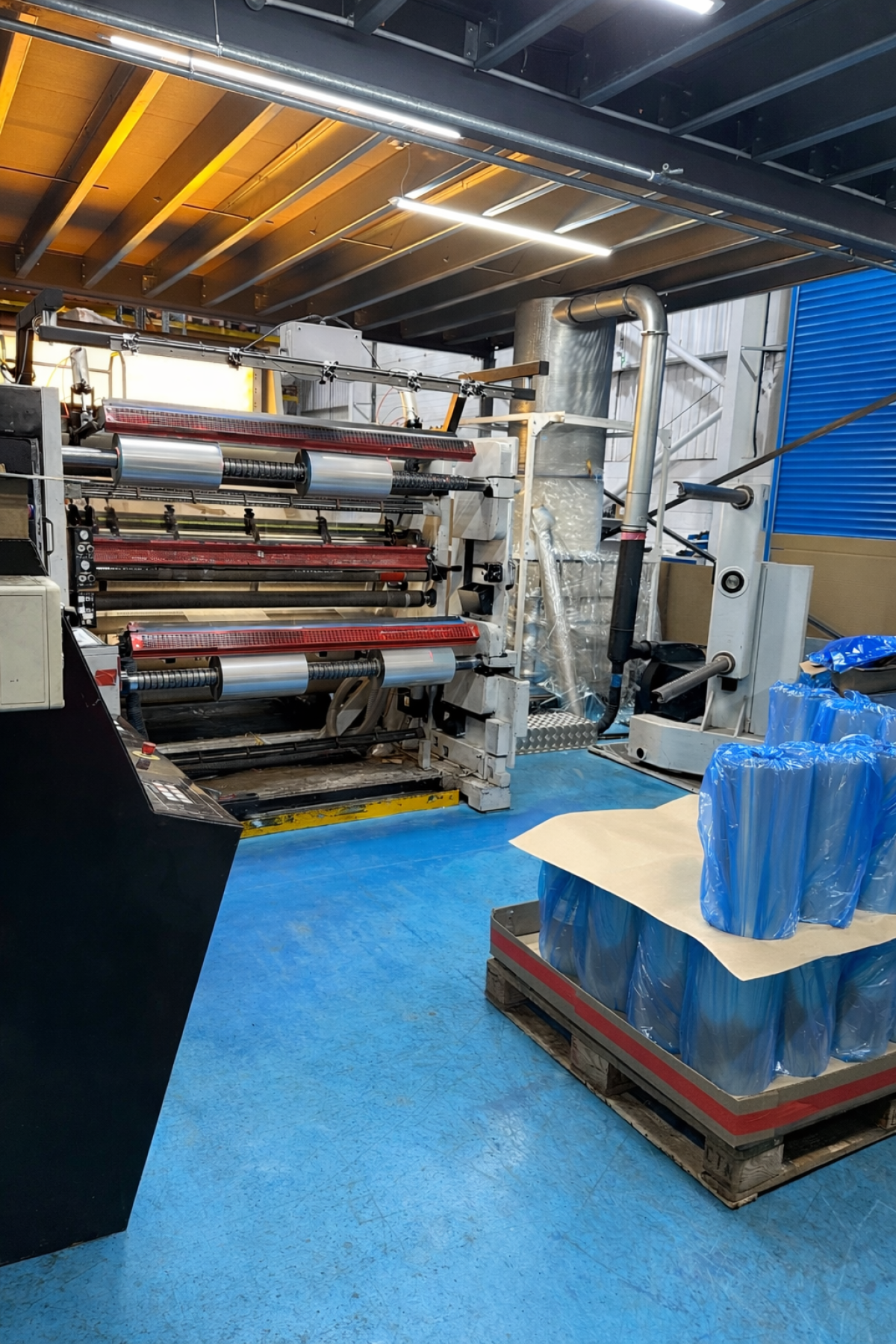
Started alongside. Now runs the operation.
Thorpe Packaging needed to replace unsupported systems without disrupting a live manufacturing operation. Simportal started alongside the existing ERP, MES and WMS, so management and operators could test processes and compare records before switching anything off.
Today, materials, scheduling, production, quality, warehouse operations and invoicing run on Simportal, with Sage remaining the accounting system. The legacy systems were retired on 1 July 2026, without interrupting production.
The results
Thorpe reports:
- No interruption to production during the retirement of its legacy ERP, MES and WMS.
- Stock accuracy above 99%, verified by manual stock checks and by comparing stock counts from both the legacy systems and Simportal during parallel running.
- Instant traceability lookups, previously taking more than 20 minutes per item.
- Zero machine stoppages caused by material shortages since the July transition, at the time of reporting.
- Stock count time more than halved.
- Audit preparation reduced to a fraction of the previous time.
In September 2026, Thorpe also achieved a BRCGS AA+ rating in an unannounced audit, supported by traceability records captured through daily activity.
The problem: confidence in the records was slipping
Thorpe’s legacy systems were unsupported and hard to adapt, and the information on screen no longer reliably reflected what was happening on the floor. Scanner processes were awkward under production pressure, scheduling had moved onto a table of physical job cards, and stock movements were often requested through WhatsApp. Production kept moving, but control depended on workarounds and individual knowledge.
Traceability exposed the problem. Following a source reel to a finished reel meant checking the system, finding the paper job card and reconciling the two by hand.
The transition: start alongside, prove it, then switch off
Simportal began with materials, running alongside the legacy systems. Existing stock records were imported, and the warehouse team linked old and new identities during ordinary work: scan the old label, apply the new one.
With materials live, production processes were developed against real activity. The MES went through four builds as the detail became clear, from machine lanes and reel joins to label types. Each working version took three or four days to build and was reviewed with Thorpe the following week. It took time from Thorpe’s team, but every process was tested before the legacy systems were retired.
Simportal was ready two to three months before the final transition. Director Peter Jolliffe chose to wait until 1 July 2026, aligning it with Thorpe’s financial year and allowing more time to validate the information. The customer controlled the timetable.
What Thorpe runs on Simportal today
- Materials and planning. A live view of what is on site, committed and needed, with scheduling planned against available materials rather than piles of job cards.
- Shop floor execution. Operators record usage and completions against a job number and a short material code, which the system checks on entry. Finished reel labels link each reel to its source material, operator, machine and lane.
- Quality and traceability. Incoming damage is photographed before a reel leaves the delivery vehicle. Traceability works in both directions across reel joins, and a weight check flags a source reel that hasn’t been recorded.
- Warehouse control. Scanner-recorded movements, with staff replenishing ahead of need and a direct call from production if supplies run low.
- Orders, despatch and invoicing. Delivery notes link shipped reels to their production history, and invoice information is exported to Sage.
- Performance and capacity. OTIF, OEE tailored to the slitting operation, and actual against planned production time, giving management better evidence for capacity and investment decisions.
A system that keeps improving
“The transition happened gradually, giving us confidence in the data before switching anything off. We improved control without disrupting production.”
Peter Jolliffe, Director, Thorpe Packaging
Simportal continues to visit the site, watch how the system is used and act on feedback. Thorpe and Simportal have agreed a further twelve months of development, including plastic tax calculations.
Come and see it running
Book a visit to Thorpe Packaging: 0333 305 5669
Or start with the Operational Control Assessment.

Unibox
- Complete stock control across on-site and off-site locations
- Year-end stock take standardised, manual collation near zero

Flexi-Films UK Ltd
- From spreadsheets to a complete operational system with Sage integration
- £10m+ turnover with controlled stock accuracy across multiple sites


Bella & Duke
- 100% digital production
- Turnover doubled while maintaining stock accuracy above 99%